If you spend any time on social media lately, it probably feels like everyone is talking about protein.
High-protein snacks.
Protein coffee.
Protein cereal.
Protein desserts.
Protein everything.
And while protein is important, the reality is that many people are already getting enough protein to meet their basic needs.
Fiber, on the other hand, is often the nutrient people are actually lacking.
This is especially true for many individuals with Avoidant/Restrictive Food Intake Disorder (ARFID), sensory sensitivities, executive functioning challenges, chronic stress, burnout, or limited safe foods.
Why Fiber Matters
Fiber plays an important role in:
- digestion and bowel regularity
- gut health
- blood sugar stability
- fullness and energy levels
- cholesterol support
- long-term health
But increasing fiber can feel complicated when many common “healthy eating” recommendations are not sensory-friendly, predictable, accessible, or realistic.
A lot of fiber advice online assumes people can comfortably eat:
- large salads
- raw vegetables
- beans
- complex meal-prepped meals
- chia puddings and smoothie bowls
For many people with ARFID, those foods may feel inaccessible, overwhelming, unpredictable, or physically uncomfortable. But that does not mean fiber is impossible.
Fiber Support Should Work With Your Nervous System — Not Against It
For many people with ARFID, eating enough at all already takes significant energy.
Adding pressure around “perfect” high-fiber foods can increase stress and make eating feel even harder.
Instead of focusing on idealized wellness foods, it can help to think about:
- what already feels safe
- what textures feel predictable
- what requires low effort
- what is realistically available during burnout or low-capacity moments
- how to gently add fiber to existing safe foods
Sometimes supporting fiber intake looks less like completely changing your diet and more like making small adjustments to foods you already eat.
ARFID-Friendly Fiber Ideas
Fiber does not have to look like traditional “health foods.”
Some more accessible or ARFID-friendly fiber options may include: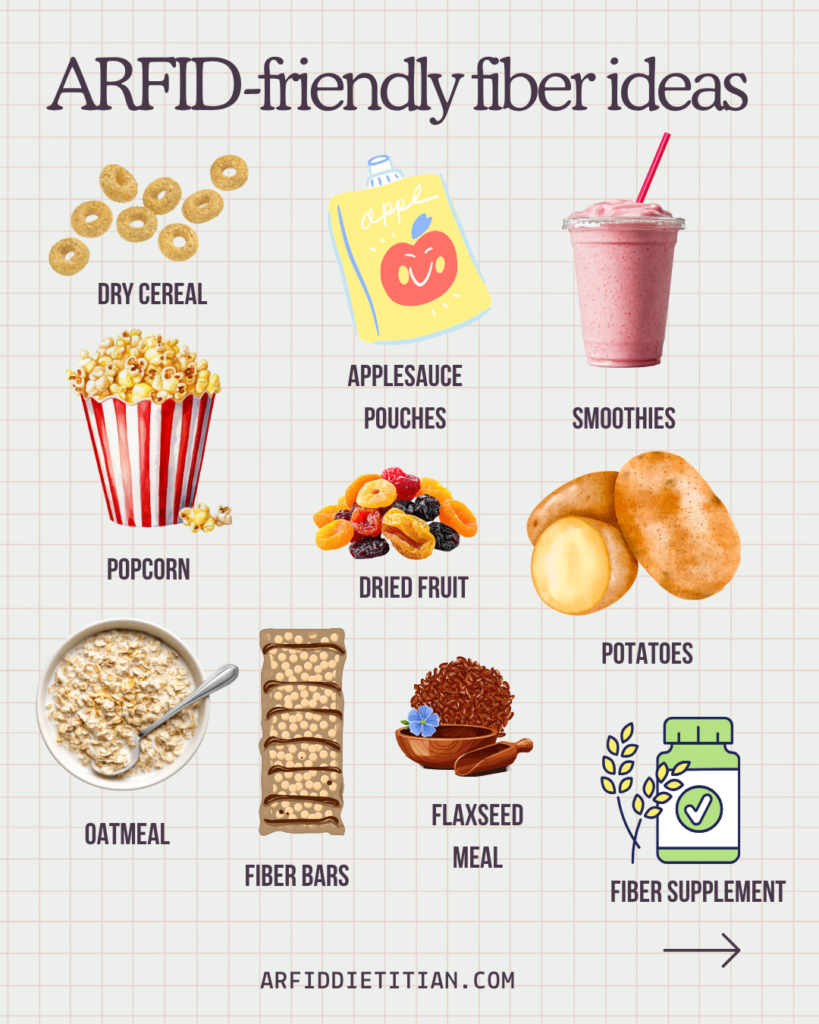
Fruit & Fruit-Based Options
- applesauce pouches or other fruit pouches
- dried fruit
- freeze dried fruit
- fruit leather
- apples
- pears
- frozen fruit
- smoothies
- watermelon
- grapes
Grains & Carbohydrate Foods
- oatmeal packets
- dry cereal
- popcorn
- waffles with added fiber
- crackers with seeds or flax
- granola bars
- muffins with oats or flax
- potatoes or fries
- corn
- whole grain breads
Easy Add-Ins
- flaxseed meal mixed into yogurt, smoothies, oatmeal, or baked goods
- chia seeds or hemp seeds blended into smoothies
- fiber powder supplements
- Metamucil
- fiber gummies
Higher Fiber Swaps (If Tolerated)
- chickpea or lentil pasta
- high-fiber wraps
- roasted chickpeas
- crunchy beans
- cereals with added fiber
Not every option will work for every person. Find what works for you!
Fiber Counts Even If It Doesn’t Look Like “Wellness Culture”
One of the biggest misconceptions in nutrition is that nourishment only “counts” if it looks healthy by social media standards. But nourishment that works for your body, sensory system, energy level, and nervous system still matters.
For many people with ARFID, increasing fiber may look like:
- adding one tolerated fruit
- choosing a different cereal
- mixing flax into a preferred food
- using convenience foods
- relying on supplements during difficult periods
- eating the same fiber source consistently
Supporting Nourishment in a More Realistic Way
Nutrition support for ARFID should consider:
- sensory preferences
- nervous system safety
- executive functioning
- access and affordability
- burnout and capacity
- predictability and routine
- autonomy and flexibility
Because eating is not just about nutrients on paper. It is about whether food feels possible in the first place.
And sometimes the most supportive nutrition strategy is finding realistic, sustainable ways to support the nutrients that are often missing most.
If you’re looking for more neurodivergent-affirming, practical support around nourishment, sensory needs, safe foods, and building eating support in a more realistic way, my Foundations of Support & Nourishment: An ARFID Workbook includes tools, reflection prompts, meal support strategies, and gentle nutrition ideas designed specifically for ARFID and sensory-based eating challenges.
You can learn more/download the workbook here.